Learning Resources
Campus Library
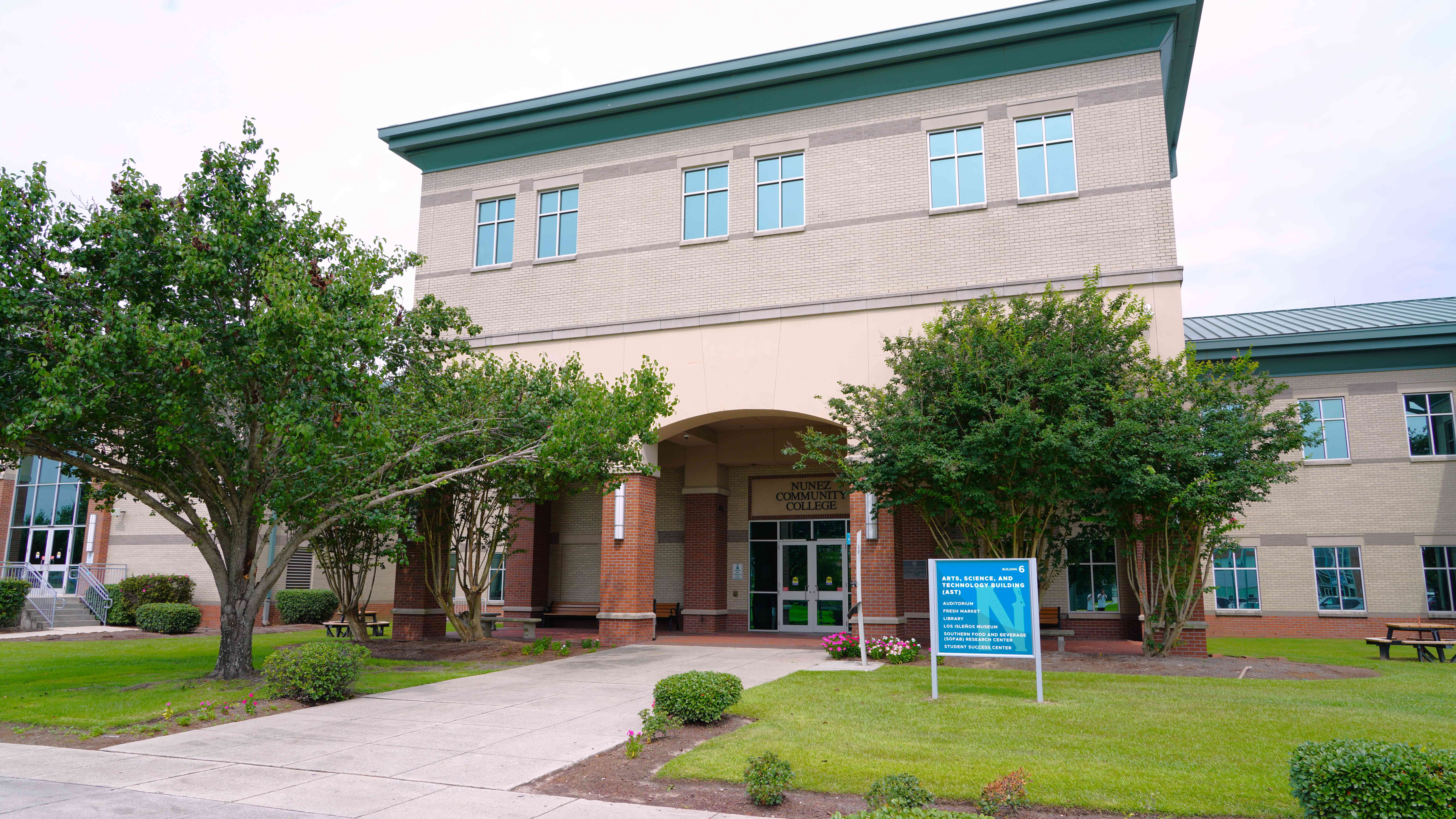
The Nunez Community College Library is a vital part of the educational program of the institution. The facility opened in Spring 2000, includes approximately 25,000 square feet with a redesigned space for collaborative socialization and quiet studying, including open area seating, enclosed study rooms, public computer access, the Islenos Museum and Archive, and the Southern Food and Beverage Research Center.
The Library conducts library instruction sessions for all students and classes as requested by the instructor. Instructors for some classes participate in the course-integrated library instruction, providing assignments that increase both information literacy skills and subject knowledge. A librarian is available to help patrons with research needs during all open hours.
The library houses a collection of over 43,000 volumes in an easily accessible open-shelf arrangement and over 519,000 e-books that can be accessed on and off campus. The library contains over 300 serials in addition to providing access to over 170,000 journals and media in electronic format.
The Library is a selective depository for state documents. The archives concentrate on materials concerning St. Bernard Parish and associated topics. The St. Bernard Genealogical Society Library is housed near the Archives.
The library is a member of LOUIS (Louisiana Library Network) and, as such, has access to over 170 full-text scholarly databases through internet-enabled computers. These electronic resources are also accessible off-campus from the Library web page at https://www.nunez.edu/library. The library staff is dedicated to assisting all students and faculty, whether they are in the Library or accessing the Library resources and services from off-campus to meet their informational needs.
Experiential Education Programs
In recognition of the importance of on-the-job training as part of occupational and professional preparation of students, Nunez Community College offers three experiential educational programs: internships, practicums, and cooperative educational programs. These provide supervised work experience in the various curricula while granting academic credit according to the standards of accrediting agencies. Students gain occupational experience to help prepare them for meaningful employment.
These programs provide the opportunity to:
Develop outside the classroom program-related knowledge and skills that are used in the work setting;
Explore, confirm, or modify career choices;
Develop professional experience and contacts;
In some cases, earn money while learning;
Receive academic credit toward a degree for work experience while attending school.
College Cooperative Education Programs
College cooperative education is an educational plan in which paid or unpaid employment is integrated into the college curriculum. Students on scholastic probation are not eligible. Agreements involving the student, the College, and the employer must be confirmed prior to registering for a cooperative course. A student must meet with his or her Program Chair before enrolling for cooperative credit.
Internship
Internship programs help to orient students to the world of work, emphasize practical aspects of the business world, and provide closer liaison and cooperation among the student, the College, and the work environment. Internships may be paid or unpaid. Internships for course credit are offered in Paralegal (SPTP 1180), Process Technology (PTEC 2910), Computer Science (CSCI 2400) and Business (BUSN 2700).
Practicum and Clinical Experiences
Supervised work experience is offered in the fields of Care and Development of Young Children, Culinary Arts, Emergency Medical Services Education, Process Technology, Practical Nursing, Teaching, Medical Office Management, Process Technology, and occasionally in other programs of study. Students work a minimum number of hours during the semester as specified in the course syllabus.